
Pre & Post
Surgical Rehabilitation
Physiotherapy before & after surgery
Whether you've had a joint replacement, tendon repair, fracture fixation or ligament reconstruction, physiotherapy plays an important role in helping you safely return to your normal activities, work, gym and sport. It can also help you prepare for surgery to improve the recovery phase.
Your physiotherapist can help with:
Preparing you for surgery and getting you into the best shape possible to speed up the recovery.
Understanding your post-operative orders and restrictions
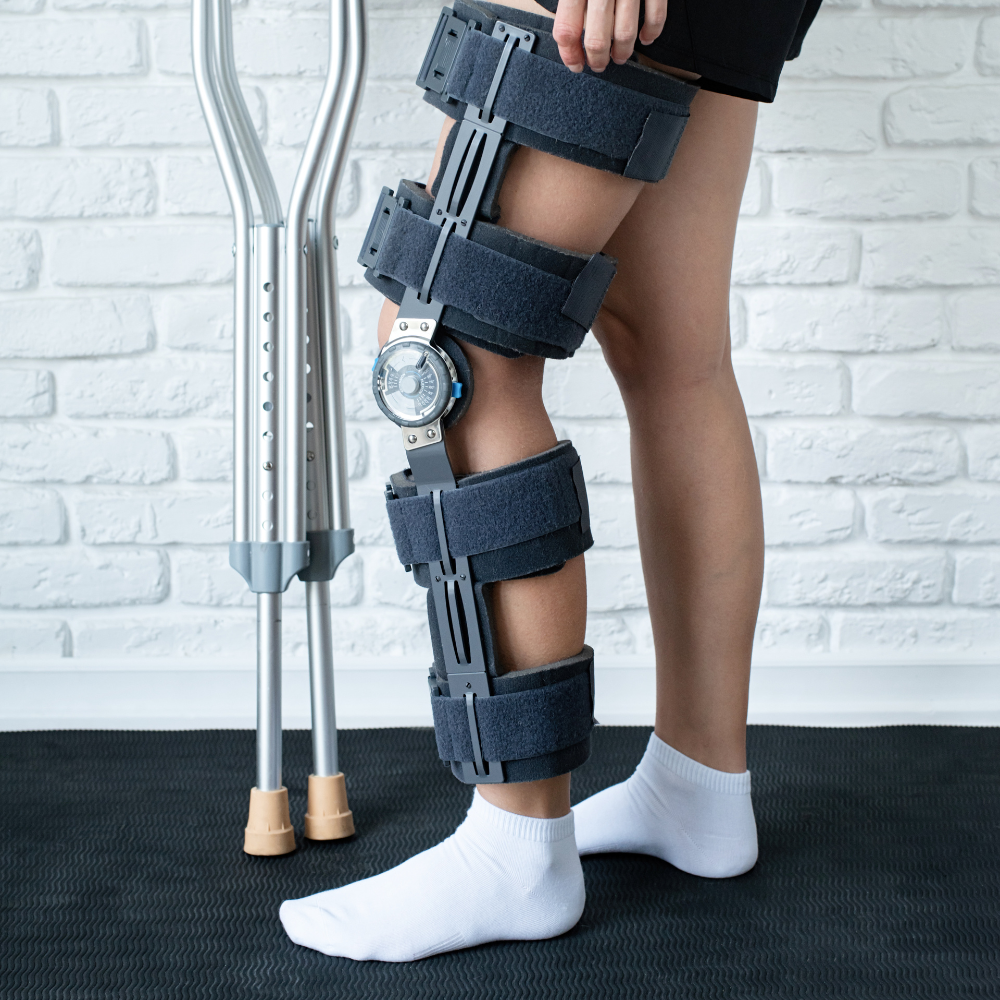
Teaching you how to safely use crutches, walking aids or other equipment
Learning how to correctly wear and use a sling, brace or boot
Ordering or recommending appropriate braces and rehabilitation equipment
Managing pain and swelling
Restoring movement and flexibility
Rebuilding strength and muscle capacity
Scar management and massage when appropriate
Improving your walking pattern and movement
Progressing your rehabilitation according to your surgeon's protocol
Developing a gradual return to work, gym, running and sport
Identifying when you may need further review from your surgeon or another health professional
Every surgery is different, and your rehabilitation will depend on the procedure performed, the tissue repaired, your surgeon's instructions and your individual goals.
Below are some of the common surgical conditions we help rehabilitate.
Upper Limb Surgeries
-
Rotator cuff repairs involve surgically repairing one or more of the tendons around the shoulder. Shoulder stabilisation procedures are performed to address instability, often following repeated dislocations or significant shoulder injuries.
How can physio help?
Early rehabilitation focuses on protecting the repair while gradually restoring shoulder movement. Your physiotherapist can help with sling use, swelling and pain management, appropriate exercises and progressing movement according to your surgeon's protocol.
As healing progresses, rehabilitation moves towards restoring shoulder strength, stability and function before returning to work, gym or sport.
How long does it take?
Recovery varies depending on the procedure and size of the repair. Following rotator cuff repair, rehabilitation commonly takes around 4-6 months, with return to higher-level sport or heavy lifting potentially taking 6-12 months.
Shoulder stabilisation procedures can also require 4-6+ months of rehabilitation, particularly before returning to contact or overhead sport.
-
Joint replacement surgery involves replacing damaged surfaces of a joint with artificial components.
Shoulder replacements may be either a standard/anatomic shoulder replacement or a reverse shoulder replacement, depending on the condition of the shoulder.
How can physio help?
Physio helps you safely restore movement and function following surgery while following your surgeon's specific precautions.
Treatment may include swelling and pain management, movement exercises, gradual strengthening and retraining everyday activities such as dressing, reaching, lifting and using the arm.
How long does it take?
Most people make significant functional improvements within the first 3 months, with ongoing improvements in strength and function occurring over 6-12 months.
Your exact restrictions will depend on the type of replacement and your surgeon's protocol.
-
A Latarjet procedure is a type of shoulder stabilisation surgery that uses a piece of bone from the shoulder blade to help stabilise the front of the shoulder.
It is commonly performed for recurrent shoulder instability or significant bone loss.
How can physio help?
Early rehabilitation focuses on protecting the surgical repair and gradually restoring safe shoulder movement.
Physio can assist with sling use, pain and swelling management, movement exercises, and later progressive strengthening of the shoulder and surrounding muscles.
How long does it take?
Initial healing commonly takes around 6-12 weeks, but returning to full strength and higher-level or contact sport can take 6 months or longer.
-
The acromioclavicular joint (ACJ) sits at the top of the shoulder where the collarbone meets the shoulder blade.
ACJ repair or reconstruction is commonly performed following a significant ACJ separation or dislocation.
How can physio help?
Physio helps protect the repair while gradually restoring shoulder movement and strength. This can include sling management, swelling and pain management, mobility exercises and progressive strengthening.
Later rehabilitation focuses on restoring overhead function, pushing, pulling, lifting and sport-specific movements.
How long does it take?
Recovery commonly takes around 3-6 months, although returning to contact sport or heavy lifting may take 6 months or longer depending on the repair.
-
The labrum is a ring of cartilage that helps deepen and stabilise the shoulder socket. A SLAP tear involves the upper portion of the labrum where the biceps tendon attaches.
Surgery may be performed to repair the labrum or address associated shoulder instability.
How can physio help?
Physio helps protect the repair while gradually restoring shoulder movement, strength and stability.
Rehabilitation will progressively introduce resistance exercises, functional movements and eventually overhead, throwing or contact activities where appropriate.
How long does it take?
Recovery commonly takes around 4-6 months, with return to throwing, contact or high-level sport potentially taking 6+ months depending on the procedure.
-
Subacromial decompression is a surgical procedure performed to create more space around structures within the shoulder, sometimes involving removal of inflamed tissue or part of the acromion.
How can physio help?
Physio can help manage pain and swelling, restore shoulder movement and progressively rebuild strength.
Rehabilitation also focuses on addressing the factors that contributed to the original symptoms and safely returning to normal activity.
How long does it take?
Many people return to everyday activities within several weeks, with more complete recovery commonly occurring over 2-3 months.
-
How can physio help?
Physiotherapy is particularly important following this procedure to maintain the movement gained during surgery.
Treatment may include regular mobility exercises, manual therapy, stretching and a progressive strengthening program.
How long does it take?
Movement can improve quickly following surgery, but maintaining these gains requires consistent rehabilitation. Recovery can take several weeks to several months, depending on how restricted the shoulder was before surgery.
-
An arthroscopy uses a small camera inserted into a joint to diagnose or treat a range of conditions.
The exact rehabilitation required depends on what was performed during the procedure.
How can physio help?
Your physiotherapist can help you understand your post-operative instructions and guide you through restoring movement, reducing swelling, rebuilding strength and returning to normal function.
This may include scar management, massage, exercises, splinting and progressive loading where appropriate.
How long does it take?
Recovery can range from a few weeks to several months, depending on the procedure performed.
-
Fracture repair surgery, also known as fixation, uses plates, screws, rods or other hardware to stabilise a broken bone while it heals.
How can physio help?
Physio can assist with swelling management, movement, scar management, strengthening and restoring function.
We can also teach you how to safely use crutches or other equipment and help you understand weight-bearing restrictions.
As the fracture heals, rehabilitation progressively increases loading and functional activity.
How long does it take?
Bone healing commonly takes around 6-12 weeks, but returning to full strength and function can take several months and in some cases 12+ months, depending on the fracture and location.
-
Carpal tunnel release surgery aims to reduce pressure on the median nerve at the wrist.
How can physio help?
Physio can help manage swelling, scar sensitivity and stiffness while gradually restoring wrist and hand movement, grip strength and function.
We can also guide your return to work, lifting, and repetitive hand activities.
How long does it take?
Many people return to lighter activities within a few weeks, while grip strength and nerve symptoms can continue improving for several months.
-
Ganglion cyst removal involves surgically removing a fluid-filled cyst, commonly around the wrist or hand.
How can physio help?
Physio can help manage swelling, scar sensitivity and stiffness, restore wrist and hand movement and gradually rebuild grip strength.
Rehabilitation can also help you safely return to work, gym, and sport.
How long does it take?
Initial recovery is often around 3-6 weeks, although swelling, scar sensitivity and strength can continue improving for several months.
-
The triangular fibrocartilage complex (TFCC) helps stabilise the wrist and absorb load on the little-finger side of the wrist.
TFCC repair surgery is performed when the structure requires surgical stabilisation or repair.
How can physio help?
Rehabilitation focuses on protecting the repair before gradually restoring wrist and forearm movement, grip strength, and load tolerance.
Your physiotherapist can assist with splint or brace use, swelling management, scar care and a staged return to weight-bearing, work, and sport.
How long does it take?
Recovery following TFCC repair commonly takes around 3-6 months, although higher-level loading and sport may take longer depending on the repair and surgeon's protocol.
Lower Limb Surgeries
-
Joint replacement surgery replaces damaged joint surfaces with artificial components to reduce pain and improve function.
How can physio help?
Physiotherapy often begins very soon after surgery.
We can teach you how to safely use crutches or other walking aids, understand your weight bearing restrictions, manage swelling, restore movement and progressively rebuild strength.
Rehabilitation then focuses on returning to walking, stairs, work, gym and recreational activities.
How long does it take?
Many people make significant improvements within the first 6-12 weeks, with strength and function continuing to improve for 6-12 months.
The timeline varies depending on the joint replaced and individual circumstances.
-
Ligament reconstruction involves replacing or repairing a damaged knee ligament to restore stability.
How can physio help?
Rehabilitation begins with managing swelling and restoring knee movement before progressively rebuilding quadriceps, hamstring and lower-limb strength.
Later stages focus on running, jumping, landing, change of direction and sport-specific movements.
Physio also helps assess whether you have met the strength and functional criteria required to safely progress through each stage.
How long does it take?
Recovery following ligament reconstruction commonly takes 9-12 months for ACLs and PCLs, with return to pivoting, contact and high level sport often requiring 12+ months and being based on rehabilitation criteria rather than time alone.
-
Meniscus surgery can involve repairing the damaged meniscus or removing the damaged portion, known as a meniscectomy.
How can physio help?
Physio can help restore knee movement, manage swelling, rebuild strength and progressively return you to normal activities.
Following a meniscus repair, rehabilitation will initially be more protective to allow the repair to heal.
How long does it take?
Following a meniscectomy, many people return to normal activities within around 4-8 weeks.
A meniscus repair generally requires a longer rehabilitation period, commonly around 3-6 months, depending on the repair and surgeon's protocol.
-
Fracture fixation uses surgical hardware to stabilise a broken bone while it heals.
How can physio help?
Physio can assist with crutch and walking aid use, weight bearing restrictions, swelling management, restoring joint movement, scar management and rebuilding strength.
Rehabilitation progressively increases loading as the bone heals and medical clearance is provided.
How long does it take?
Bone healing commonly takes around 6-12 weeks, although more complex fractures and lower limb injuries may require several months before returning to full function, work or sport.
-
Tendon repair surgery is performed when a tendon has completely or significantly ruptured.
These repairs require careful protection during the early healing phase before progressively increasing load.
How can physio help?
Physio helps you understand and follow your post operative restrictions, manage swelling, use braces or boots correctly, and progressively restore movement and strength.
Rehabilitation eventually progresses to running, jumping, change of direction and sport specific activities where appropriate.
How long does it take?
Tendon healing generally takes several months. Rehabilitation following Achilles tendon repair commonly takes around 6-12 months, while quadriceps and patellar tendon repairs can also require 6+ months before returning to higher-level activities.
-
An ankle fusion involves surgically joining the bones of the ankle joint to reduce pain and eliminate painful movement.
How can physio help?
Early rehabilitation focuses on safe mobility, crutch use, weight bearing restrictions and swelling management.
As healing progresses, physiotherapy helps restore strength, balance, walking ability, and function around the fused joint.
How long does it take?
Bone fusion can take around 3-4 months, with full rehabilitation often taking 6-12 months depending on the individual and the level of function required.Ankle Fusion
An ankle fusion involves surgically joining the bones of the ankle joint to reduce pain and eliminate painful movement.
How can physio help?
Early rehabilitation focuses on safe mobility, crutch use, weight bearing restrictions and swelling management.
As healing progresses, physiotherapy helps restore strength, balance, walking ability, and function around the fused joint.
How long does it take?
Bone fusion can take around 3-4 months, with full rehabilitation often taking 6-12 months depending on the individual and the level of function required.
-
Ankle ligament repairs or reconstructions may be required following significant ankle instability or severe ligament injuries.
This can include the lateral ankle ligaments such as the ATFL and CFL, or the syndesmosis between the tibia and fibula.
How can physio help?
Physio can assist with boot or brace use, crutch education, swelling management, restoring ankle movement and progressively rebuilding calf, ankle, and lower limb strength.
Later rehabilitation focuses on balance, running, jumping, change of direction, and sport-specific movements.
How long does it take?
Recovery varies significantly depending on which structures were repaired. Many ankle ligament repairs require around 3-6 months of rehabilitation, while syndesmosis repairs and more complex injuries may take 6+ months to return to higher-level sport.
-
Lisfranc repairs or reconstructions may be required following a sprain or break to the bones in the middle of your foot..
How can physio help?
Physio can assist with boot or brace use, crutch education, swelling management, maintain full body fitness and progressively rebuilding foot mobility and strength once you are out of your boot.
Later rehabilitation focuses on balance, running, jumping, change of direction, and sport-specific movements.
How long does it take?
Recovery varies significantly depending on which structures were repaired. Many lisfranc repairs require around 3-6 months of rehabilitation, and more complex injuries may take 6+ months to return to higher-level sport.
Spinal Surgeries
-
A discectomy removes the portion of a disc that's pressing on a nerve, usually to relieve leg or arm pain caused by a disc bulge or herniation. Many are now done as minimally invasive or
microdiscectomy procedures, which can mean a faster initial recovery.
• Early focus: gentle walking, avoiding prolonged sitting, and easing back into daily movement
• Progressing to: core and postural strengthening once cleared by your surgeon
• Later stage: building back full strength and, where relevant, return to sport or manual work
-
A laminectomy removes part of the vertebra (the lamina) to take pressure off the spinal cord or
nerves, often used to treat spinal stenosis. Because it involves a bit more bony surgery than a
discectomy, recovery is typically a little more gradual.
• Early focus: protecting the healing site, managing pain, and restoring safe basic movement
• Progressing to: rebuilding spinal and core stability
• Later stage: functional strengthening tailored to your goals, whether that's walking further,
returning to work or getting back to hobbies
-
Rehab after a spinal fracture depends heavily on the type of fracture, whether it was treated surgically
(such as with a vertebroplasty or kyphoplasty, or spinal fixation for more complex fractures) or
managed conservatively with bracing.
• Early focus: pain management and protecting the fracture site while it heals, often guided by
bracing precautions• Progressing to: gradual return to upright activity and gentle mobility work
• Later stage: restoring strength, posture and confidence with movement
-
Cervical fusion, including ACDF (anterior cervical discectomy and fusion), joins two or more vertebrae in the neck, often to relieve nerve compression causing arm pain, numbness or weakness.
Recovery is typically slower than lower back procedures given the fusion needs time to set.
• Early focus: neck protection, gentle range of motion within your surgeon's limits, and
monitoring for arm symptoms
• Progressing to: restoring neck and shoulder girdle strength as fusion progresses
• Later stage: full return to work, driving and activity once cleared
-
We also see people through rehab for a range of other spinal surgeries, including:
• Spinal fusion (lumbar or thoracic)
• Foraminotomy
• Laminoplasty
• Spinal decompression surgery
• Revision spinal surgery
When should you see a physio?
Your physiotherapist can be involved from before the surgery (if applicable), or during the early stages of your recovery, not just when you're ready to exercise.
We can help you:
• Understand your post operative instructions
• Safely use crutches, walking aids, or other equipment
• Correctly use a sling, brace or boot
• Manage pain and swelling
• Restore movement
• Manage scars when appropriate
• Rebuild strength
• Progress weight-bearing safely
• Return to work and everyday activities
• Return to the gym, running and sport
• Identify when further medical review may be required
Your surgeon's instructions and rehabilitation protocol always take priority. Recovery timelines are general guides, not deadlines, and your rehabilitation should be individualised to your surgery, healing progress, and goals.
If you're unsure what you should or shouldn't be doing after surgery, your physiotherapist can help you understand your rehabilitation plan and safely work through each stage of recovery.
Book online or get in touch to book with our team in Osborne Park or Joondalup. You’ll be able to upload any information from the surgeon during the booking process or send it through prior if you can.