
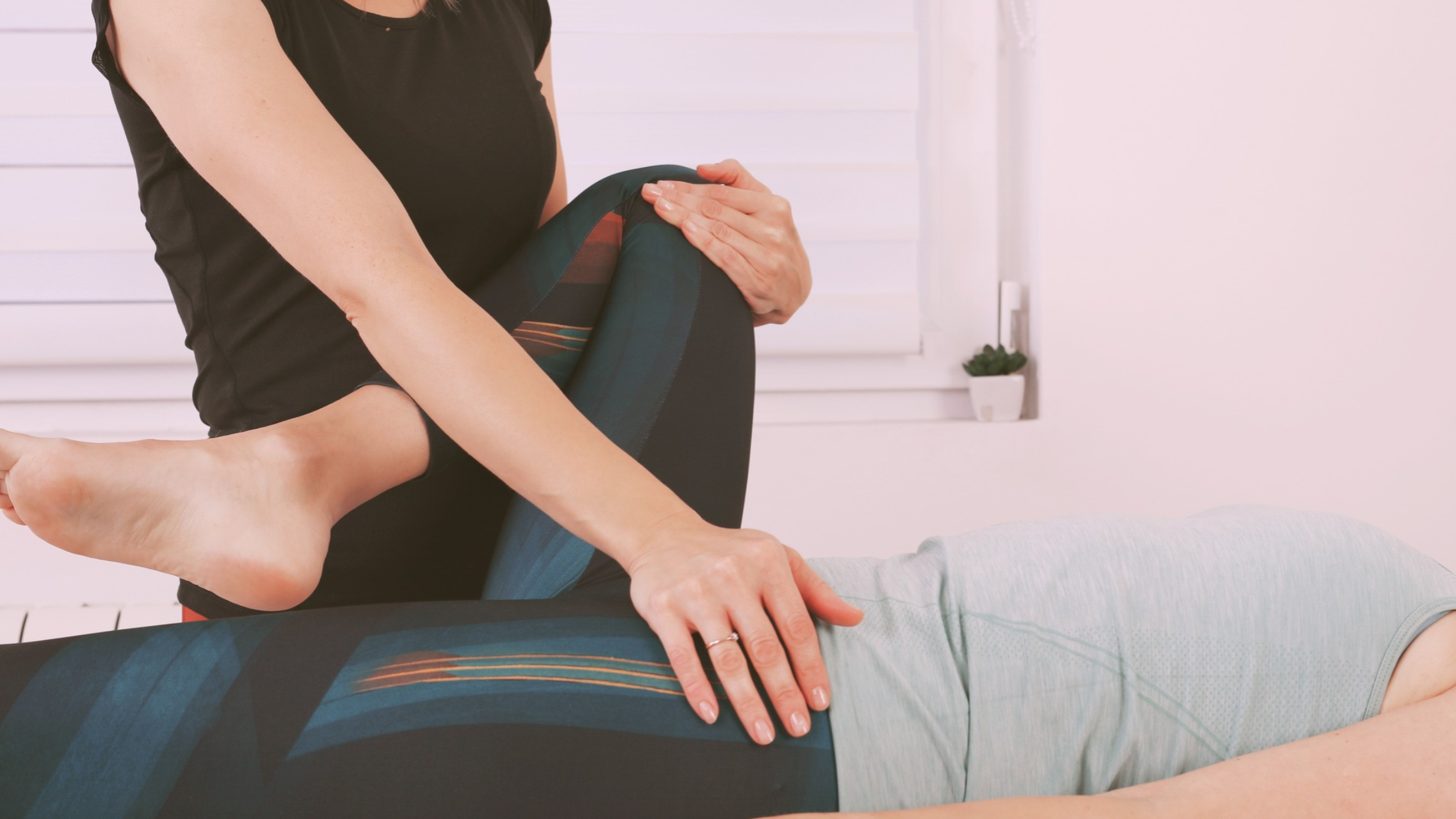
Hip, Pelvis & SIJ Injuries
Your hips and pelvis are designed to tolerate large amounts of load and are involved in almost everything we do, from walking and running to jumping, squatting, changing direction and playing sport.
Hip and pelvic pain can come from muscles, tendons, joints, bones, nerves or other surrounding tissues. Physiotherapy can help identify what is contributing to your symptoms, settle pain and irritation, restore movement and strength, and progressively get you back to the activities you enjoy.
Here are some of the common hip, pelvis and SIJ conditions we treat in athletes and the general population.
Acute + Sports Injuries
-
The hip flexors, quadriceps and hamstrings are heavily involved in running, sprinting, jumping and kicking.
Strains can range from mild muscle injuries through to significant tears and commonly occur during high speed or explosive movements.
How can physio help?
Physio can help determine the severity of the injury and progressively restore strength, flexibility, coordination and load tolerance.
Rehabilitation will typically progress from basic strengthening through to running, sprinting, jumping, kicking and sport specific movements as appropriate.
How long does it take?
Milder strains may improve within 2-4 weeks, while moderate injuries can take 6-12 weeks. More significant tears can take several months, particularly if surgery is required.
-
Groin related pain syndrome describes pain around the groin that is commonly associated with structures such as the adductor muscles and tendons, hip flexors or abdominal and pelvic structures.
It is particularly common in athletes involved in running, kicking, cutting and rapid changes of direction.
How can physio help?
Physio can help identify which structures and activities are contributing to your symptoms and develop a progressive strengthening program.
Rehabilitation commonly includes strengthening the adductors, hip and trunk, alongside gradually increasing running, kicking, change of direction and sport-specific loads.
How long does it take?
Milder cases may improve within 4-8 weeks, while more persistent groin pain can take 3-6+ months to fully rehabilitate.
-
The hip labrum is a ring of cartilage around the edge of the hip socket that contributes to joint stability and helps maintain the seal within the hip joint.
Labral tears can occur following a traumatic injury or alongside other hip conditions such as FAI. Symptoms may include groin pain, clicking, catching or discomfort with certain hip movements.
How can physio help?
Physio can help determine which activities are aggravating your symptoms and improve the strength and control of the muscles around the hip.
Treatment may include progressive hip and lower-limb strengthening, movement modification and a graded return to activity.
Some labral tears can be managed without surgery, while persistent symptoms may require further medical assessment.
Physio and conservative management doesn’t “fix” the labral tear itself, rather it helps with modifying movement and building strength and control to reduce pain reduce risk of further injury.
Many people are able to continue with life and sport with a labral tear without long term consequences. This is what Physiotherapy aims to help you do, or we can help you decide if or when further treatment may be necessary.How long does it take?
Conservative rehabilitation may take 6-12+ weeks to manage pain and symptoms, more persistent symptoms potentially requiring several months of rehabilitation.
Following surgical labral repair, rehabilitation commonly takes around 3-6+ months, depending on the procedure and surgeon's protocol.
-
A hip pointer is a bruise to the iliac crest, the bony ridge at the top of the pelvis. It usually happens from a direct knock, fall or tackle in contact sports.
It can cause localised pain, swelling and bruising, and pain with walking, running, twisting, coughing or laughing.
How can physio help?
Physio can assess the injury, help settle pain and swelling, and determine whether further imaging may be needed to rule out a fracture.
Treatment may include restoring hip and trunk movement and strength, advice on protective padding and a graded return to training and contact.
How long does it take?
Most hip pointers improve within 1-3 weeks, while more significant bruising can take 4-6 weeks to return to full contact sport.
-
Fractures of the femur or pelvis can occur following significant trauma, falls or sporting injuries, while bone stress injuries develop gradually when repeated loading causes damage to the bone faster than the body can repair it.
These injuries can significantly affect your ability to walk, run and place weight through the lower limb. Bone stress injuries are particularly common in runners and athletes following a sudden increase in training volume, intensity or frequency.
How can physio help?
Depending on the type and severity of the injury, physiotherapy may begin with teaching you how to safely use crutches or other walking aids, understand your weight-bearing restrictions and manage swelling and movement limitations.
For suspected bone stress injuries, physio can assess your symptoms, training history and loading patterns and determine whether further medical assessment or imaging may be required.
Once appropriately cleared to rehabilitate, treatment focuses on restoring movement, rebuilding strength and progressively increasing your bone and lower-limb loading capacity.
Rehabilitation will gradually progress towards walking, running, jumping and sport specific activities based on healing, symptoms and functional progress.
How long does it take?
Recovery varies significantly depending on the type, location and severity of the injury.
Bone healing commonly takes around 6-12 weeks, although more significant femur and pelvic fractures can require several months of rehabilitation. Bone stress injuries may require 6-12+ weeks of modified or reduced impact loading, with a gradual return to running and sport often taking 3-6 months or longer.
Returning to high level, contact or impact sport following a significant fracture may take 6-12+ months, depending on the injury, surgical management and individual recovery.
It is important not to push through suspected bone stress injury symptoms, as continuing to overload the bone can increase the risk of the injury progressing to a complete fracture.
Chronic + Overuse Injuries
-
Gluteal tendinopathy affects the tendons of the gluteal muscles, most commonly the gluteus medius and gluteus minimus, which help stabilise the pelvis and control the hip. This can sometimes be referred to as Greater Trochanteric Pain Syndrome (GTPS).
It commonly causes pain around the outside of the hip and can be aggravated by running, walking, stairs, lying on the affected side or standing on one leg.
How can physio help?
Physio can assess the loads being placed through the tendon and identify factors that may be contributing to irritation.
Treatment usually involves modifying aggravating activities and progressively strengthening the gluteal and surrounding hip muscles. We can also help with running, gym and activity modifications while the tendon builds capacity.
How long does it take?
Gluteal tendinopathy can take several months to fully settle. Many people begin to notice improvement within 6-12 weeks, but longer-standing or more irritable cases may require 3-6+ months of progressive rehabilitation.
-
Hip bursitis refers to irritation of one of the fluid-filled bursae around the hip. The most common is the trochanteric bursa on the outside of the hip.
Pain can occur with walking, running, stairs, lying on the affected side or prolonged periods of standing.
How can physio help?
Physio can help identify what is irritating the area and modify activities or positions that are placing excessive pressure through the hip.
Treatment may include progressive hip strengthening, load management, movement strategies and advice around sleeping positions and exercise.
How long does it take?
Milder cases may improve within several weeks, while more persistent symptoms can take 3-6 months to fully settle.
It's also important to recognise that lateral hip pain is often related to the gluteal tendons rather than isolated bursitis, so an appropriate assessment is important.
-
Hip osteoarthritis occurs when the tissues within the hip joint undergo degenerative changes.
It can cause pain, stiffness and reduced movement, often affecting activities such as walking, running, getting out of a chair, putting on shoes or getting in and out of a car.
How can physio help?
While physiotherapy cannot reverse osteoarthritis, it can help manage symptoms and maintain your strength, mobility and function.
Treatment may include progressive strengthening, mobility exercises, aerobic exercise, activity modification and strategies to manage flare ups. We also run the GLA:D® program for hip and knee osteoarthritis.
How long does it take?
Hip osteoarthritis is generally a long term condition rather than an injury that simply heals. Symptoms can often improve over 6-12+ weeks with consistent exercise and load management, with ongoing management helping maintain function over time.
-
Femoroacetabular impingement (FAI) occurs when the shape or movement of the ball and socket of the hip results in increased contact between the bones during certain movements, and subsequently causing pain or loss of function / mobility.
It can cause pain around the front of the hip or groin, particularly with deep hip flexion, squatting, sitting or sporting activities. Often this pain can be related to an injury to the labrum.
It is important to note that the “shape” of the hip joint that is typically seen in FAI does not necessarily mean there will be pain or loss of function. Many people can have these shape variations and continue through life and sport without pain or much impact on their activities.
It is generally only when all these aspects happen together that we may need to intervene with treatment.How can physio help?
Physio can help identify which movements and loads are aggravating your symptoms and develop strategies to improve your hip's capacity and help you tolerate these movements more.
Treatment may include strengthening the hip and surrounding muscles, modifying aggravating activities and progressively returning to running, gym or sport.
Physio and conservative management doesn’t change the shape of your hip, rather it helps with modifying movement and building strength and control to reduce pain reduce risk of further injury.Not everyone with FAI requires surgery, and symptoms can often be managed with appropriate rehabilitation.
How long does it take?
Improvement in pain can often occur over 6-12 weeks, although rehabilitation may take 3-6 months or longer depending on symptom duration, severity and activity demands.
-
Proximal hamstring tendinopathy affects the hamstring tendons where they attach to the ischial tuberosity (sitting bone) at the base of the buttock.
It commonly causes deep buttock pain that is aggravated by prolonged sitting, running (particularly uphill or at speed), lunging, deep hip bending and hamstring stretching.
How can physio help?
Physio can assess the loads being placed through the tendon and help you modify aggravating positions such as prolonged sitting and stretching.
Treatment usually involves progressive hamstring and gluteal strengthening, alongside a graded return to running, gym and sport.
How long does it take?
Many people notice improvement within 6-12 weeks, although longer-standing cases often require 3-6+ months of progressive rehabilitation.
-
Osteitis pubis describes irritation and bone stress around the pubic symphysis, the joint at the front of the pelvis where the two pubic bones meet.
It is most common in running and kicking sports such as football and soccer. It can cause pain at the front of the pelvis or groin that may spread into the inner thighs or lower abdomen, and is often aggravated by running, kicking, sit-ups and changing direction.
How can physio help?
Physio can assess the hips, groin, trunk and pelvis to identify the loads contributing to your symptoms. Osteitis pubis often overlaps with other causes of groin pain, so a thorough assessment is important.
Treatment usually includes a period of load modification, progressive adductor, hip and trunk strengthening and a carefully graded return to running, kicking and change of direction.
How long does it take?
Osteitis pubis can be slow to settle. Many people require 3-6 months of progressive rehabilitation, with longer-standing cases sometimes taking longer to return to full sport.
-
The sacroiliac joints (SIJs) connect the base of the spine to the pelvis and help transfer load between the upper and lower body.
SIJ pain can cause discomfort around the lower back, buttock or pelvic region and may be aggravated by walking, running, prolonged positions, lifting or changing direction.
How can physio help?
Physio can assess the lower back, pelvis, hips and surrounding muscles to identify factors that may be contributing to your symptoms.
Treatment may include strengthening the hips and trunk, mobility exercises, movement retraining, load management and strategies to gradually return to your usual activities.
How long does it take?
Many cases improve within 4-8 weeks with appropriate management, although more persistent or recurrent symptoms may take several months to fully settle.
-
Pelvic girdle pain (PGP) is pain around the joints of the pelvis, including the SIJs at the back and the pubic symphysis at the front, during pregnancy or after birth. It is sometimes called symphysis pubis dysfunction (SPD).
It can cause pain with walking, stairs, standing on one leg, getting dressed, rolling over in bed or getting in and out of a car.
How can physio help?
Physio can help you understand your symptoms and find easier ways to manage everyday tasks.
Treatment may include exercises to strengthen the hips, trunk and pelvic floor, movement strategies, advice on supports such as pelvic belts, and guidance to help you stay active throughout pregnancy and after birth.
How long does it take?
Many people find their symptoms become more manageable with treatment during pregnancy, and most improve within weeks to a few months after birth, although some may need longer support.
-
Piriformis syndrome describes irritation or compression of the sciatic nerve around the piriformis muscle in the buttock.
It can cause deep buttock pain and sometimes symptoms that travel down the back of the leg.
How can physio help?
Physio can assess the hip, lower back and surrounding muscles to determine what may be contributing to your symptoms.
Treatment may include modifying aggravating activities, improving hip and trunk strength, mobility exercises and, where appropriate, nerve mobility exercises.
How long does it take?
Milder cases may improve within several weeks, while more persistent symptoms can take several months depending on the underlying cause.
It is important to assess symptoms thoroughly as pain around the buttock and down the leg can have several possible causes.
-
Snapping hip syndrome describes a sensation or sound of the hip "snapping" during movement.
It can occur when a tendon or muscle moves over a bony prominence, or less commonly due to structures within the hip joint. Some people experience snapping without pain, while others develop pain or irritation around the hip.
How can physio help?
Physio can assess which structure is contributing to the snapping and identify movements or activities that may be aggravating it.
Treatment may include strengthening the hip and surrounding muscles, improving movement control, modifying activity and gradually increasing load tolerance.
How long does it take?
If the snapping is pain free, treatment may not be required. When symptoms are painful, improvement can often occur within 6-12 weeks, although persistent cases may take several months.
-
Developmental hip dysplasia (DHD) occurs when the hip joint does not develop with the ball of the femur sitting securely within the hip socket.
It is often identified during infancy or childhood, but some people may not develop symptoms until later in life. Symptoms can include hip or groin pain, reduced movement, instability or difficulty with certain activities.
How can physio help?
Physiotherapy can help maintain hip strength, stability and function while managing symptoms and activity levels.
Treatment may include strengthening the hip and surrounding muscles, improving movement control, modifying aggravating activities and developing strategies to maintain participation in exercise and sport.
For people with symptomatic or more significant dysplasia, physiotherapy may form part of a broader management plan alongside medical or surgical care.
How long does it take?
DHD is a structural condition rather than an injury that simply heals. Physiotherapy can help manage symptoms and function over the longer term, with the appropriate treatment depending on the individual's age, symptoms and severity of dysplasia.
When should you see a physio?
You don't have to wait until hip pain becomes severe.
Consider seeing a physiotherapist if you:
• Have persistent hip, groin, buttock or pelvic pain
• Have pain that is limiting work, training or everyday activities
• Notice reduced hip movement or strength
• Have pain with running, jumping or changing direction
• Experience clicking, catching or snapping around the hip
• Have sustained an injury during sport or exercise
• Are struggling to return to sport after an injury
• Have increased your training load and developed new pain
• Have pelvic or hip pain during or after pregnancy
• Aren't sure what is causing your symptoms
A physiotherapist can assess the area, determine what may be contributing to your symptoms and develop an individualised plan to help you get back to doing what you love.
Remember: healing times are general guides, not deadlines. Your recovery will depend on the specific tissue involved, severity of the injury, duration of symptoms, treatment approach and your individual goals.
For more information please get in touch with us or make an appointment at one of our clinics in Osborne Park, Joondalup or O’Connor